Thermostat: 68 or 72?
One of you wants it warmer. The other wants a lower bill. What the Department of Energy says about savings, a fair compromise, and who buys the blanket. Below: both sides as they'd actually put it, then the ruling The Judge gives when two people bring this one into a Settle It room.
Both sides
68 is a normal indoor temperature. Every degree you turn it up costs real money. Put on a sweater like an adult.
72. I refuse to live in a walk-in refrigerator to save eleven dollars a month. A home should not require outerwear.
The Judge's ruling
Ruling: The Department of Energy says turning your thermostat down 7 to 10 degrees for 8 hours a day in fall and winter can save as much as 10% a year on heating and cooling. That supports Sam's point that thermostat settings affect the bill, but it doesn't establish how much this particular household would save by changing from 72 to 68. Riley is arguing about comfort, not money. Try 70 during the day, which gives Riley two of her four degrees, and 67 overnight. Put the schedule in a programmable thermostat and neither of you has to keep adjusting it. If either of you is still uncomfortable, revisit it.
Sentence: Sam buys Riley a very good blanket. Riley stops adjusting the thermostat after 10 p.m. The schedule goes in the thermostat, not in the group chat.
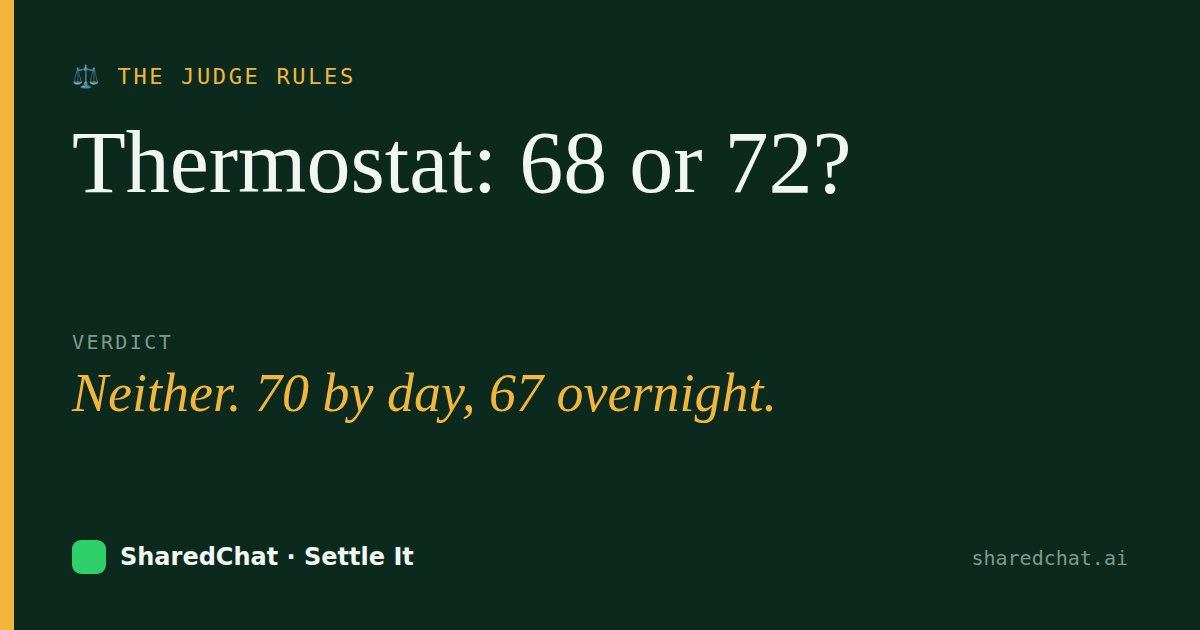
Share the card, or better, send the loser the link. Sample ruling. In the app, the Judge waits for both sides and can ask follow-up questions before deciding.
Sources
More famous debates
Read next: How to stop having the same argument with your partner
← Settle It